A Living Vision: From Pedagogy to Passion
- Dec 30, 2025
- 2 min read
The original vision was simple in name, but expansive in purpose: The School of Pedagogy, Strings, and Voice. It was conceived as more than a music school it was meant to be a place where tradition, discipline, expression, and curiosity could coexist. That vision continues to evolve, shaped by more than 30 years of immersion in classical, romantic, and contemporary music.
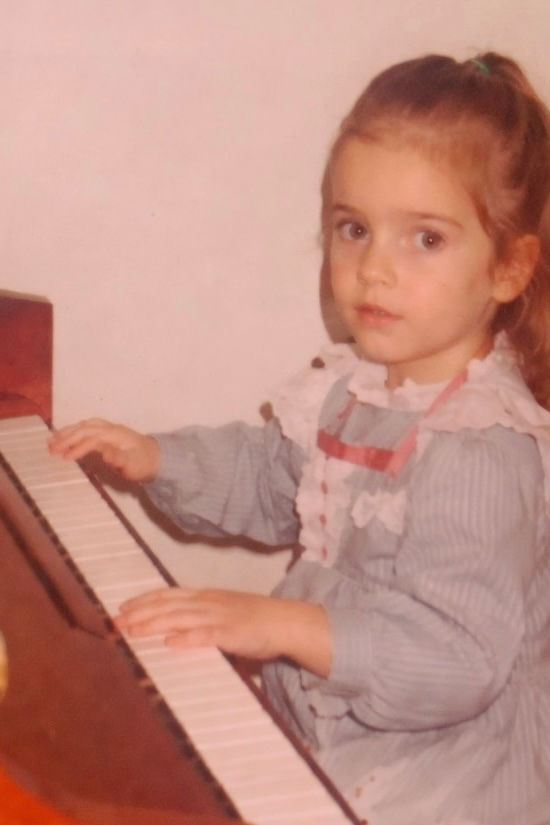
From a young age, my musical gravity was drawn unmistakably to Chopin. His ability to translate human emotion into sound, his vulnerability, fire, restraint, and passion, was transformative. Chopin’s music has a way of leaving one breathless. It certainly did for me. That early connection became a lifelong pursuit of understanding not just how music is played, but why it moves us so deeply.
As life and listening expanded, so did influence. I began hearing familiar emotional weight in unexpected places: the deep resonance of cello and violin, the gravity of bass lines, and the marriage of intensity and beauty found in artists and groups such as Apocalyptica, Escala, Metallica, and Max Richter. These connections revealed something essential, music is not confined by genre. Its truth lies in expression, architecture, and intention.
To truly understand the theology of an instrument, its language, limits, and possibilities, one must study with talent, passion, and a disciplined instructor. Over the years, our work has been grounded in time-honored methods and repertoire such as, The Suzuki Method, Bach Preludes, Czerny Studies, Beethoven’s Symphonies, Chopin’s Mazurkas, Strauss Theology Studies and many others. Each contributes a vital layer to a musician’s foundation.
Our curriculum draws deeply from the great eras of music history.
Baroque foundations provide structure and clarity, with composers such as J.S. Bach forming the foundation of Western harmony and counterpoint.
Classical masters like Mozart and Haydn refine form, balance, and melodic intelligence.
The Romantic Era invites emotion and individuality Beethoven’s revolutionary voice, Chopin’s intimate piano language, Brahms’ complexity, Tchaikovsky’s lyricism, Schumann’s vast emotional landscapes, and Schubert’s songful humanity.
Modern and 20th-century innovators, Debussy, Stravinsky, and Philip Glass challenge conventions and expand the sonic palette.
Beyond these are countless voices worth exploring. Handel, Vivaldi, Rachmaninoff, Shostakovich, Bartók, Ravel, Liszt, Williams, Einaudi, Winston and more.
Equally important is the continued education of our teachers. Growth never stops. Recently, I revisited The Music Lesson by Victor Wooten, a book that continually reshapes how we think about music, teaching, and connection. In recent years, our pedagogical study has included Intelligent Music Teaching, Inspired Piano Teaching, and The Musician’s Toolbox, alongside essential works on psychology and learning such as Mindset and How We Learn. We also integrate the Taubman Approach to Piano Technique, correct articulation emphasizing ergonomic, healthy, and sustainable playing.
At the heart of all of this is inspiration.
Have you seen your instructor perform Chopin’s Nocturnes, Metallica, and Bohemian Rhapsody? If not, you should ask them to. Students should be inspired the very first day they sit at the bench or lift their instrument. Music education should ignite curiosity, confidence, and awe.
We invite you to join us at our next open house to meet our instructors, experience our philosophy, and learn more about our programs.
To register, please email Kayla Peeters at KaylaPeetersMusic@gmail.com.


Comments